



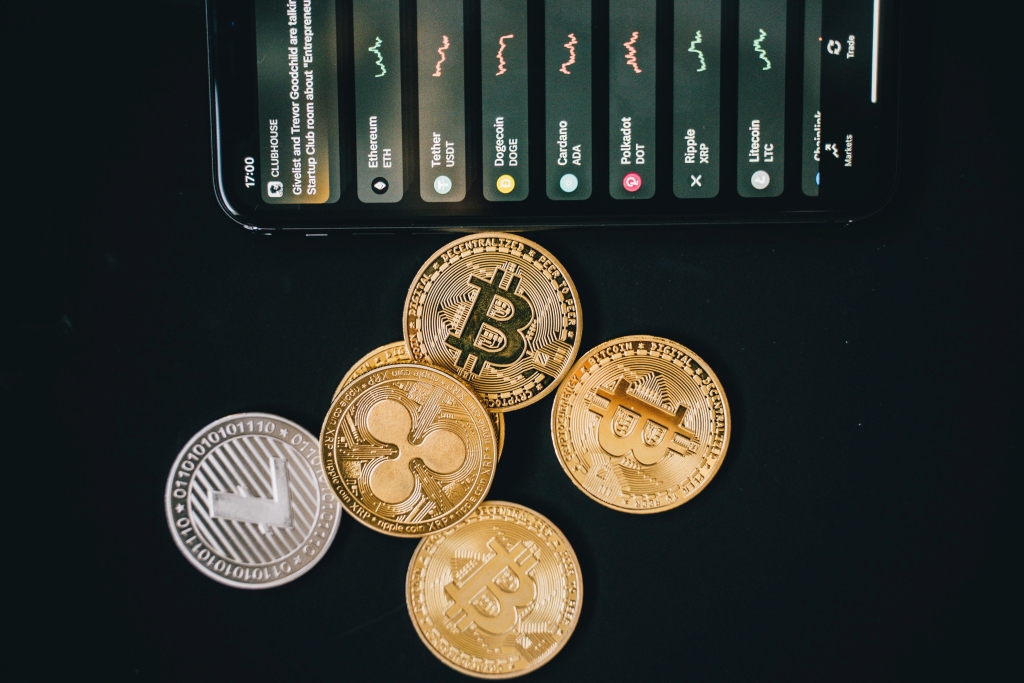
How to invest in crypto for long-term profit

Investing in cryptocurrencies is risky, but making your money work for you is extremely profitable in the long run. Cryptocurrencies allow for significant changes, both in terms of growth and decline, leading to incredible gains or losses as a result of these changes. Compared to traditional stocks, cryptocurrencies are highly volatile and require investors to prepare for all sorts of scenarios. Panic selling and FOMO (fear of missing out) buying don't always help in the long run, and given how erratic market movements can be, looking at the bigger picture can be beneficial.
If you're looking for advice on how to invest in cryptocurrencies for the long term, you've come to the right place. We won't recommend any specific coin or token as the best cryptocurrency to invest in, but we can share some general principles for building a portfolio for long-term gains.
How to Invest in Cryptocurrencies: A Quick Guide
Investing in cryptocurrencies may seem complicated from the outside, but if we take it step by step, you'll see that it's quite simple. There are two tasks waiting for you.
First, do some research and determine which is the best cryptocurrency to invest in. This is the hardest part. You will analyze price history, study the coin's whitepaper so you can assess its market niche, and try to factor in events such as government regulations and celebrity endorsements. Some investors look for cryptocurrencies with a long track record of returns, while others prefer newcomers to the market because their value could skyrocket quickly. Deciding which cryptocurrency to invest in is both an art and a science. There's a reason why even the most seasoned professionals lose money on some investments.
Once you decide to invest in crypto and identify which coins and tokens are worthy of your crypto investments, it's time to build your portfolio. Fortunately, you are on the Kriptomat platform, where buying and selling crypto is as easy as shopping for clothes or booking a trip online.
Will Bitcoin be valuable in the long term?
Bitcoin has a fixed supply cap of 21 million BTC, which is given as a reward to miners for securing the network. Approximately every four years, the supply rate is halved, making BTC scarcer over time. BTC is not the only cryptocurrency with this type of periodic supply rate reduction. Various altcoins also follow a diminishing supply schedule. Since only a limited number of BTC will ever exist, even lost coins contribute to the scarcity of the asset.
Cryptocurrencies offer an impressive value proposition where you can invest small amounts and achieve huge profits, but that doesn't mean there's no risk. In fact, most cryptocurrency investors minimize risk by diversifying their portfolios across multiple assets.
Should I invest in altcoins?
Grayscale Investments, one of the world's most prominent institutional investors in the blockchain arena, has a portfolio that includes many cryptocurrencies, including Bitcoin, Ethereum, Litecoin, Stellar, and XRP, among others. Their digital asset portfolio is primarily made up of Bitcoin, which accounts for over $6 billion of their $7.3 billion AUM, but holding a mix of BTC and other altcoins is a good start. Many more people are investing large sums in the world's first cryptocurrency than altcoins like Litecoin and XRP. When an altcoin crashes, gains from Bitcoin or other altcoins can preserve the value of your portfolio. In fact, many altcoin investors shift funds into Bitcoin when it starts to rise, pushing Bitcoin even higher while altcoins fall in value.
How risky is investing in cryptocurrencies?
The crypto market is very unpredictable and creates millionaires as often as it bankrupts them. There is no objectively risk-free way to invest in anything, and only intuition and experience will help you come out a winner. How much you should invest depends on how much you are willing to lose, and that should give you a fair idea of the level of risk involved in entering the cryptocurrency space. Unlike the traditional stock market, there are no centralized entities to be held accountable here. This makes the blockchain industry ripe for scam attempts, so it's crucial to only invest in projects you believe are truly worthwhile. Just because an asset is increasing in value doesn't necessarily mean it's actually worth something.
From scam-prone ICOs (initial coin offerings) to obvious pump-and-dump schemes, there's a lot to learn to better understand the crypto market. You can't profit from a project if you can't identify its value.
Where can I buy cryptocurrencies?
Digital assets can be bought, sold, and in some cases, stored on various cryptocurrency exchanges online. The two main types are centralized and decentralized exchanges.
- Simple Access: Centralized exchanges function similarly to how traditional stock exchanges facilitate trading. An order book is used to gather bid and ask data and to match traders in real time. The price of an asset is calculated based on the supply and demand ratio within the order book.
- Alternative technical approach: Decentralized exchanges have gone through multiple iterations over the past decade. Attempts to use order book systems with DEXs (decentralized exchanges) resulted in slow exchanges with very little liquidity. Lack of incentives for market makers. With the introduction of automated market makers (AMMs), modern DEXs pose a threat to some established CEXs (centralized exchanges). Instead of using an order book to track bid/ask information, current DEXs lock token pairs into liquidity pools. The ratio of tokens in the pool determines their price, and liquidity providers are rewarded for staking and contributing to the liquidity pool.
Kriptomat provides a mobile and desktop application with an extremely simple interface for securely buying, selling, and storing cryptocurrencies.
What kind of exchange office should I use?
Both types of exchanges have advantages and disadvantages. Unlike DEXs, centralized exchanges are reliably fast, with multiple teams of dedicated professionals working to optimize the platform for the best possible user experience. Additionally, while CEXs are bigger targets for hackers, they are more likely to reimburse your losses than an exchange without central authority. Most CEXs also have built-in fiat-to-crypto ramps, but some decentralized exchanges offer this feature as well.
Where should I store my digital assets?
Another critical aspect of long-term crypto investing is storage. While exchange wallets are relatively secure, leaving your assets online presents a risk that is pretty easy to mitigate. Whether it's a backup phone lying around or a dedicated hardware wallet, keeping your funds offline is much safer and fairly easy to set up. Be sure to save your wallet address seed phrase so you always have access to your tokens. Losing this information can lead to the depreciation of your entire portfolio as your assets become inaccessible. Kuna wallets for cryptocurrencies make this process as easy as possible, while maintaining state-of-the-art security standards through password protection and two-factor authentication.
There are many types of cryptocurrencies, but they can generally be categorized as follows: * **Bitcoin:** The original and most well-known cryptocurrency, often referred to as digital gold. * **Altcoins:** A broad category that includes all cryptocurrencies other than Bitcoin. These can further be divided into: * **Payment Coins:** Designed to be used as a medium of exchange, similar to traditional currencies (e.g., Litecoin, Bitcoin Cash). * **Platform Coins:** Cryptocurrencies that power decentralized platforms and applications, often referred to as "smart contract platforms" (e.g., Ethereum, Solana, Cardano). * **Stablecoins:** Cryptocurrencies designed to minimize price volatility by pegging their value to a stable asset like a fiat currency (e.g., USD Coin, Tether). * **Privacy Coins:** Cryptocurrencies that offer enhanced anonymity for transactions by obscuring sender, receiver, and transaction amounts (e.g., Monero, Zcash). * **DeFi Tokens:** Tokens associated with decentralized finance (DeFi) protocols, used for governance, staking, or providing liquidity. * **Meme Coins:** Cryptocurrencies inspired by internet memes or jokes, often known for their high volatility and speculative nature (e.g., Dogecoin, Shiba Inu). * **Utility Tokens:** Tokens that grant users access to a specific product or service within a blockchain ecosystem. * **Security Tokens:** Digital representations of real-world assets (like stocks or real estate) that are subject to securities regulations. * **Central Bank Digital Currencies (CBDCs):** Digital forms of a country's fiat currency, issued and backed by the central bank. These are not decentralized like most cryptocurrencies.
Among the various altcoins available for purchase, stablecoins offer the versatility of cryptocurrency with the stability of fiat currency. For example, Tether (USDT) is a popular stablecoin whose value is pegged to the US dollar. This allows traders to exit or enter markets in an instant without waiting for fiat-to-crypto conversions. Data suggests there are over 5,000 altcoins, but not all are worth your money, and most are likely not worth your time. However, the dollar value of an altcoin is not always proportional to how valuable it is. Many utility tokens are more useful for the services they enable than their actual value. It's easy to get lost in technical indicators and trend lines, but especially in the case of early projects, it's crucial to invest only in genuine projects that can provide value to the market. Impossible claims are often just that – impossible.
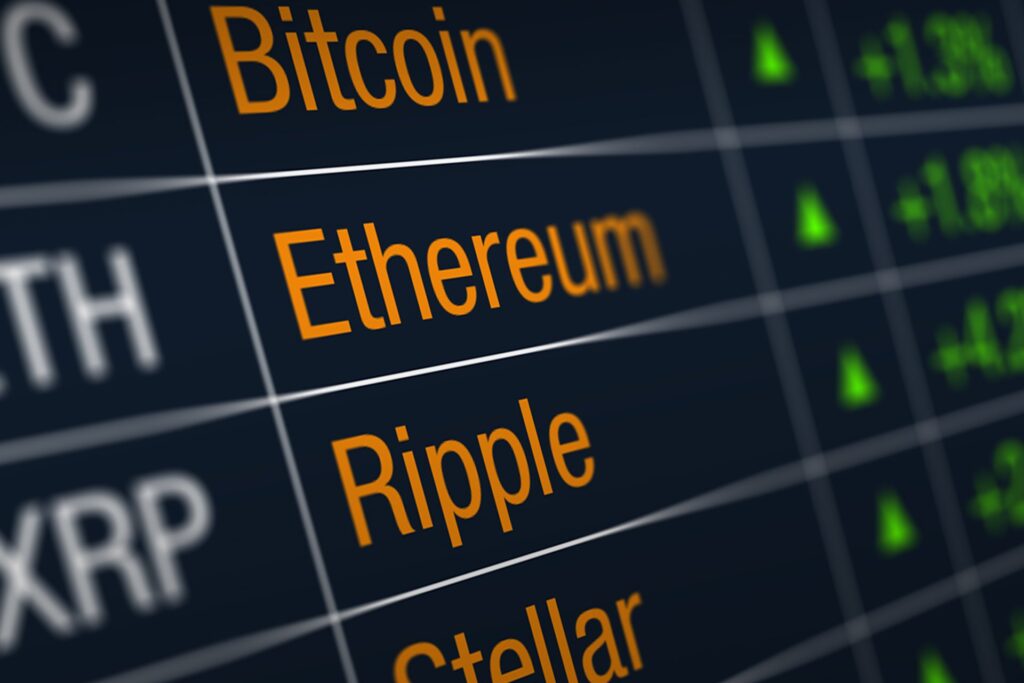
Do your own research before allocating any part of your portfolio to cryptocurrency, and steer clear of anything that even remotely resembles a multi-level marketing scheme. Visit cryptocurrency price page to see all coins currently available from your Kriptomat account.
Which cryptocurrencies should I invest in long-term?
The question of which cryptocurrencies are best to invest in has no single answer.
For long-term investments, many buyers decide to stick with the top coins by market capitalization, such as BTC, XRP, and ETH, and others as shown in the cryptocurrency price table. This will give you a good idea of what the community generally thinks is most valuable and is a great way to dive into the world of blockchain technology. Some new projects will enter the top rankings as quickly as they will leave, and this market testing can be useful in determining what is worthless and what is valuable. It can be tempting to invest large sums in high-risk assets, but this can be detrimental, especially for long-term investors. Consistent growth over time shows how much an asset means in the market. This is a fast-moving industry, but it can be rewarding to keep up with it.
How do I know if a cryptocurrency is worth investing in?
Investing in anything requires analysis. For long-term ventures, investors use three main methods to measure the advantages and risks of a particular asset. Fundamental analysis assesses the intrinsic value of a token or project within the context of the current market and its outlook. Most projects release a white paper before a token sale, and studying this document can provide deeper insight into what the asset offers. Be sure to review economic factors and other crypto industry-specific events such as Bitcoin's halving every four years.
What other forms of analysis can I use?
Another popular method of evaluation is technical analysis. This involves analyzing historical price chart data to identify patterns in market behavior. This can help in understanding trader behavior, and metrics such as daily trading volume, prominent support and resistance levels, and certain technical indicators can present a broader picture of its potential.
Although technical analysis is generally reserved for short-term projections, it's possible to learn a lot about how it reacts to external events by charting cryptocurrency price patterns. This can be particularly useful in the long term and, when combined with fundamental analysis, can provide a well-rounded view of a project's value. Through quantitative analysis, investors can assess how an asset is likely to behave based on historical data. While past performance is never an exclusive indicator of future value, it's crucial to learn more not only about the token but also about the market you are investing in.
How can I make money from cryptocurrencies?
The purpose of any investment is to make money, and cryptocurrency investments can make your money work for you in more than one way. Created as a solution to the scalability and energy consumption problems of Bitcoin's Proof of Work algorithm, Proof of Stake has crept into many blockchain-based projects in recent years. Instead of rewarding miners for performing computations to validate transactions, Proof of Stake rewards participants for providing liquidity by locking tokens in a smart contract. Depending on the token, rewards range from a variable APR on the staked token to entirely new tokens that can be further staked. Decentralized finance (DeFi) is a hotbed for staking protocols, and hacks in the past year have resulted in millions being drained from various DeFi platforms – not a place you'd want to keep your life savings. Some staking implementations allow network participants to entrust their stake to validator nodes, achieving a balance between security and risk. Others offer rewards just for holding assets in their wallets for a certain period. This ability to stake off-chain from a hardware wallet makes things much more appealing for long-term investors, providing security from malicious actors on the network. The most sensible approach for most people to long-term profitability may be to accumulate a diversified portfolio of cryptocurrencies and periodically rebalance it. We will explore this topic in future guides.
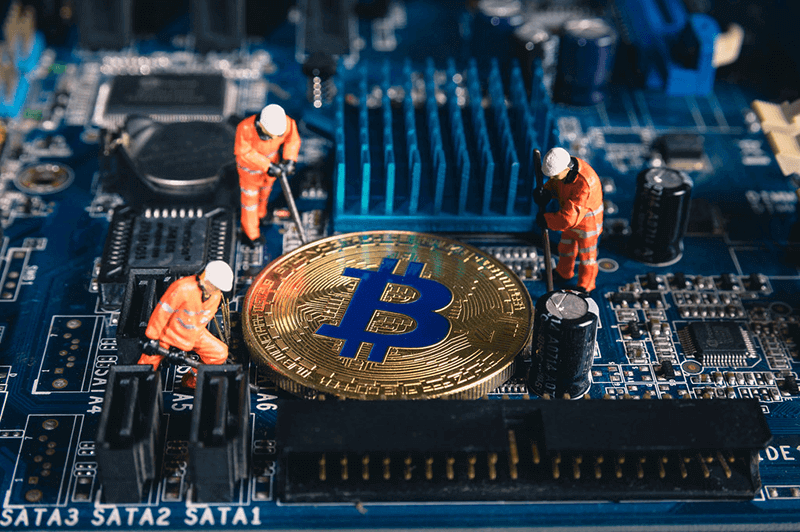
Is staking more profitable than mining?
Staking is not only beneficial for individual investors, and this has led to a wave of people investing in the crypto space, lowering the barrier to entry into the world of cryptocurrencies from the need for top-tier mining machines to a simple hardware wallet. While most of the cryptocurrency mining industry has shifted to sustainable energy sources, Proof of Stake is far more energy-efficient and environmentally friendly. It also makes 51% attacks much harder to carry out due to the sheer cost of acquiring that much power. Miners also have to deal with the depreciating value of their machines over time, periodic hardware upgrades, and adapting to other operational costs of mining the network. Anyone new to the world of crypto has a secure way to get involved with the complex topic of „staking and rewards“ through the new Kriptomat feature – Savings account.
Now you know how to invest in cryptocurrencies
Cryptocurrency investments can experience impressive growth in short periods, but it is essential to have a fundamental understanding of how a project works before risking any capital. Short-term investments may seem like an easy way to make money quickly, but trading on shorter timeframes requires experience, intuition, and finesse. Volatile markets can evoke all sorts of emotions in inexperienced traders, and what may seem like the right decision at the moment can often turn out to be detrimental in the long run. Blockchain removes control from centralized institutions and empowers the individual investor.
Bitcoin has given us decentralized money, and altcoins have given us a decentralized economy. The industry may be young, but it is already on its way to adoption as a leader. As more people get involved, cryptocurrencies may soon become less of an investment in blockchain and more of an investment in the future economy.



 Serbian
  English