



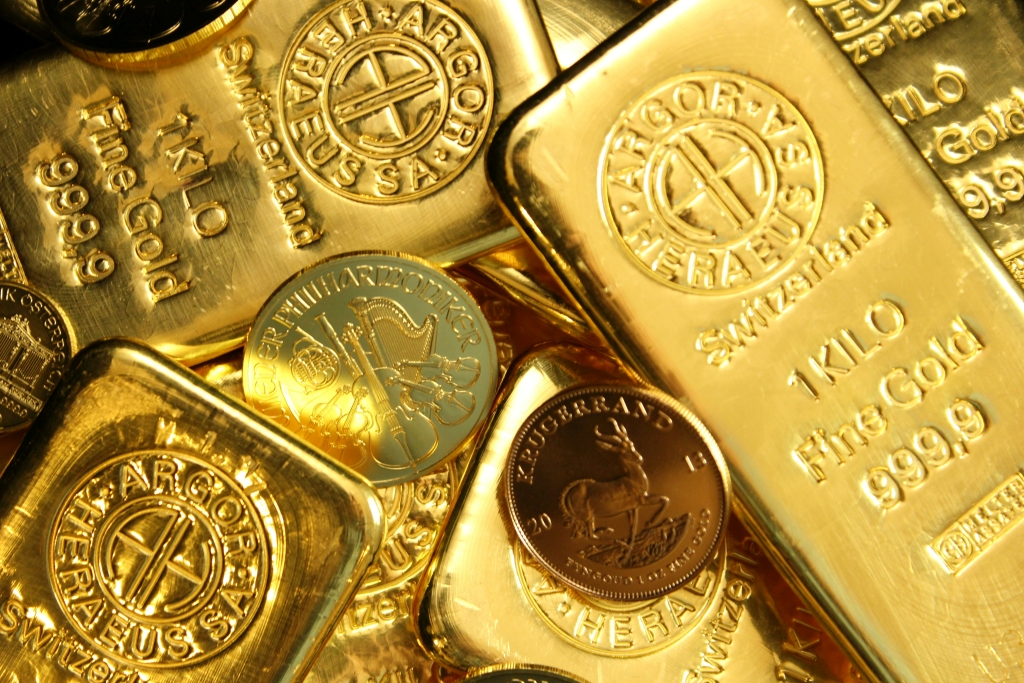
The traditional use value of gold as a basic currency is no longer utilized today. Gold's use value today is reflected in the preservation of financial capital for both individuals and states. In translation, gold means Financial insurance. Throughout history, gold has proven to be the best protection in cases of both high inflation and deflation. (Inflation represents a general increase in prices, as a consequence of which, a weakening of the value of money occurs... Deflation represents a decrease in the money supply, as a consequence of which, a strengthening of the value of money occurs)
A number of investors also use investing in investment gold as a form of financial security for their future. This trend is noticeable among middle-aged investors who want to increase their income during retirement. These investors buy investment gold in a format that suits their financial capabilities. Their projection is that when they retire, they will cash in one gold bar or ducat each month and thus increase their income. For these purposes, 10, 20, ounce, and 50-gram gold bars are most often purchased.

Investors invest in gold for the following reasons:
- The price of gold generally achieves stable annual growth.
- Gold is the best asset insurance against economic uncertainty and financial market risks.
- Gold is not an imaginary security, but is physically available to the buyer and easily transferable.
- Gold is an increasingly sought-after investment product worldwide. In the last year, demand for gold in Europe has increased severalfold.
- Gold can never become worthless, it is eternal.
- Gold can be traded and sold worldwide.
- Gold is not subject to various burdens, unlike other forms of tangible assets.
- The right time to buy investment gold is when you have an unallocated amount of money that is not business-tied. This essentially means when you have savings that are not generating any returns. It's money that isn't engaged in business and is losing value on its own. Effectively, money depreciates due to inflation. What does this actually mean? Nominally, you have the same amount of money at the beginning and end of the year, but the quantity of goods you can buy with that amount significantly decreases as a result of the general rise in product prices – inflation.
Investing in gold is a globally recognized way to preserve value. Today, gold is mostly sold worldwide in investment form. Investing in gold is not an investment in the true sense of the word, but rather an insurance policy against inflation, currency collapse, and other extreme crises. One does not profit from gold; rather, one invests in it as a form of insurance for an investment portfolio, where gold serves as a hedge against risky investments in stocks, bonds, and other securities.
It is advisable for every investor to have 20 to 30% of their assets in gold, with the remainder in stocks, bonds, real estate, and business. One should never invest all money in a single investment category. Any increase in the price of gold above the inflation rate during the observed period represents additional profit, i.e., earnings.
In the long term, gold has proven to be an exceptionally stable and reliable store of value against inflationary shocks, to which paper money is particularly susceptible. Two centuries ago, an ounce of gold could buy goods, almost gram for gram, of the same value as it can today.



 Serbian
  English